Aging Infrastructure, Real Dollars: The True Price American Enterprises Pay for Outdated Systems
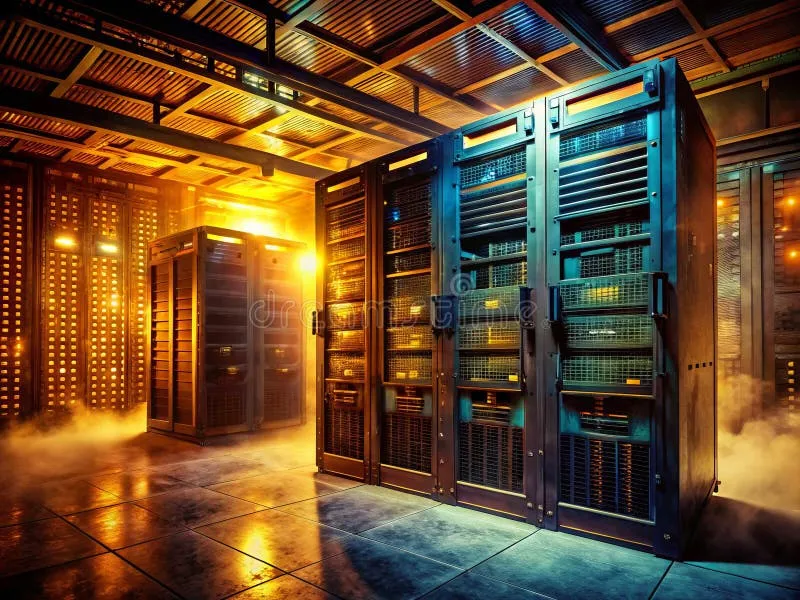
Photo: enterprise server room outdated technology corporate office, via thumbs.dreamstime.com
There is a quiet crisis running through the back offices of American enterprise. It does not trigger headlines or prompt emergency board meetings. It simply accumulates—line item by line item, quarter after quarter—until one day a CFO stares at a technology budget and realizes that the organization is spending more to maintain the past than to build the future.
Legacy systems are not merely a technology inconvenience. They are a structural financial liability, and the data is beginning to reflect just how severe that liability has become.
What "Legacy" Actually Costs: Beyond the Maintenance Contract
When enterprise leaders calculate the cost of an aging system, the conversation typically starts and ends with licensing and maintenance fees. That framing misses most of the picture.
Research from the Brookings Institution and various enterprise technology analysts consistently points to a broader cost architecture that includes four distinct layers. First, there are direct maintenance costs—often consuming 70 to 80 percent of an organization's total IT budget, leaving minimal capital for innovation. Second, there is productivity erosion: employees working around system limitations, manually reconciling data across disconnected platforms, or waiting on slow processing cycles. Third, integration expenses mount steadily as enterprises bolt modern applications onto aging cores, creating a patchwork architecture that is expensive to maintain and fragile under load. Finally, there is the opportunity cost—the analytics capabilities never deployed, the automation never implemented, the customer experiences never improved because the underlying infrastructure could not support them.
For a mid-sized U.S. enterprise with annual revenues between $500 million and $2 billion, these combined costs routinely reach seven figures annually. For large enterprises, the figure climbs considerably higher.
The Productivity Drain Nobody Measures
One of the most underexamined dimensions of legacy system cost is workforce productivity loss. Operations leaders across manufacturing, financial services, and healthcare consistently report the same pattern: skilled employees devoting significant portions of their workweek to compensating for what their systems cannot do.
Consider a regional insurance carrier running a policy management platform built in the early 2000s. Underwriters cannot access real-time data without running batch reports that take hours to generate. Customer service representatives toggle between three separate screens to answer a single inquiry. Compliance teams manually export data into spreadsheets to perform analyses the system was never designed to produce. None of these activities appear as line items in the technology budget. They appear as labor costs, and they compound every time headcount grows.
The conservative estimate from operations consulting engagements suggests that employees in legacy-heavy environments spend between 15 and 25 percent of their working hours on workarounds and manual reconciliation. At scale, that is not an inefficiency. It is a structural drag on organizational output.
Why Enterprises Stay Stuck: The Modernization Paralysis Problem
If the costs are this significant, why do so many enterprises continue deferring modernization? The answer is rarely complacency. It is complexity.
Enterprises that have operated on legacy platforms for a decade or more have often embedded those systems deeply into their operational DNA. Workflows are built around system limitations. Institutional knowledge about workarounds resides in the heads of long-tenured employees rather than in documentation. Data models are inconsistent, sometimes corrupted, and poorly understood by current staff.
The perceived risk of migration frequently outweighs the perceived cost of staying put—particularly when the pain is distributed and gradual rather than acute and visible. A system outage triggers immediate action. A 20 percent productivity drag rarely does.
There is also a budget optics problem. Technology modernization requires upfront capital expenditure that shows up clearly on the balance sheet. The cost of inaction, by contrast, is distributed across labor budgets, project delays, and missed revenue—categories that are harder to trace back to their root cause.
A Phased Framework That Actually Works
The answer to legacy modernization is not the wholesale "rip and replace" approach that vendors often advocate. That strategy carries enormous implementation risk, disrupts operations during transition, and frequently exceeds budget projections. For most mid-to-large enterprises, a phased modernization framework offers a more pragmatic path.
Phase One: Systemic Cost Mapping. Before any modernization initiative can be prioritized intelligently, organizations need a complete picture of what their current systems are actually costing them. This means going beyond IT maintenance contracts to quantify productivity losses, integration overhead, compliance risk exposure, and opportunity costs. This phase typically takes 60 to 90 days and requires cross-functional input from operations, finance, HR, and technology leadership.
Phase Two: Modular Prioritization. Rather than attempting to modernize everything simultaneously, leading enterprises identify the systems or modules where the cost-benefit ratio most strongly favors near-term action. Payroll and HR platforms, for example, often yield rapid productivity and compliance returns. Customer-facing systems with direct revenue implications frequently follow. Back-office infrastructure with lower operational impact can be deferred without significant risk.
Phase Three: Integration-First Architecture. Modern middleware and API-driven integration platforms allow enterprises to connect new applications to legacy cores without full replacement. This approach, sometimes called a "strangler fig" migration, allows organizations to incrementally route workflows to modern systems while the legacy platform remains operational—reducing transition risk substantially.
Phase Four: Continuous Modernization Governance. The organizations that avoid future legacy crises are those that institutionalize modernization as an ongoing operational discipline rather than a one-time capital project. This means establishing technology lifecycle policies, regular architecture reviews, and defined deprecation timelines for all enterprise systems.
The Strategic Imperative
American enterprises operating in today's competitive environment cannot afford to treat technology modernization as a back-burner initiative. The cost of delay is real, measurable, and accelerating—as older systems become harder to integrate with modern tools, attract fewer qualified support professionals, and create growing compliance exposure as regulatory requirements evolve.
The organizations gaining competitive ground are not necessarily those with the largest technology budgets. They are the ones that have developed the discipline to assess their infrastructure honestly, prioritize modernization strategically, and execute with a clear-eyed understanding of both the costs of change and the costs of standing still.
For enterprise leaders ready to move from awareness to action, the first step is not a technology decision. It is a financial one: building the complete cost picture that makes the case for modernization impossible to defer.