Silent Budget Killers: How Forgotten Software Subscriptions Are Draining Enterprise Coffers Across America
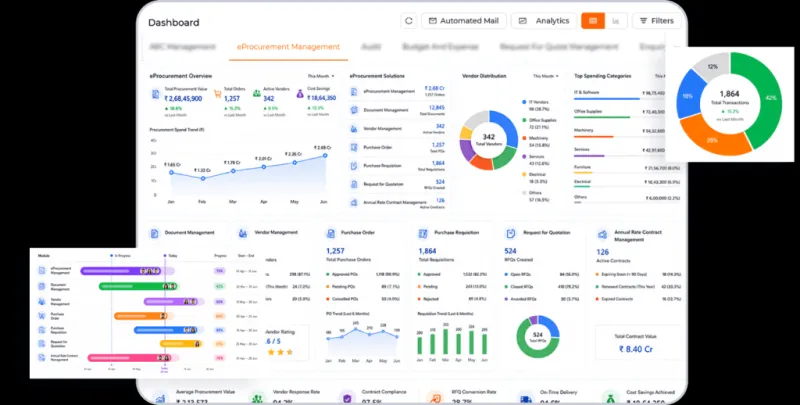
Photo: enterprise software budget management corporate procurement office, via terotam.com
Somewhere in your organization's financial infrastructure, a software subscription renewed last Tuesday. Nobody approved it. Nobody uses it. And nobody noticed.
This scenario is not an anomaly — it is the defining characteristic of enterprise software management in 2024. As American mid-market and large-scale enterprises have expanded their digital toolsets over the past decade, they have inadvertently constructed what procurement specialists now refer to informally as a "contract graveyard": a sprawling, largely invisible inventory of SaaS licenses, platform subscriptions, and cloud-based services that continue to draw from operating budgets long after their organizational usefulness has expired.
The financial consequences are substantial. According to Gartner research, enterprises routinely overspend on software by 25 to 40 percent annually, with a significant portion of that excess attributable to redundant or unused subscriptions. For a mid-market company operating on a $2 million annual software budget, that figure translates to half a million dollars in avoidable expenditure — capital that could be redirected toward workforce development, infrastructure modernization, or growth initiatives.
How the Accumulation Begins
Understanding the problem requires tracing its origins. Enterprise software sprawl rarely emerges from a single poor decision. It accumulates gradually, across departments, leadership transitions, and fiscal cycles.
The pattern typically begins with departmental autonomy. A marketing team subscribes to an analytics platform. An HR director pilots an engagement tool. A regional operations manager purchases a project coordination application to address a short-term need. Each decision is rational in isolation. But when these choices are made without centralized visibility — and without a structured offboarding process — they compound quietly over time.
Mergers and acquisitions accelerate the problem considerably. When two organizations combine, they frequently inherit overlapping technology stacks. Both entities may be paying separately for functionally identical tools: two CRM platforms, three video conferencing licenses, four document management systems. Integration timelines are demanding, and software rationalization is rarely prioritized in the immediate aftermath of a deal. The redundancies persist, often for years.
Employee turnover introduces another layer of complexity. When a team member departs, their individual software licenses — particularly those tied to personal email credentials or departmental credit cards — frequently continue renewing without anyone flagging the lapse in utilization. Multiply this across hundreds of employees over several years, and the accumulated waste becomes structurally significant.
The Procurement Visibility Gap
Central to this problem is a fundamental visibility gap within enterprise procurement functions. Many organizations lack a unified system of record for software agreements. Contracts may be stored across legal drives, departmental inboxes, and individual managers' files. Payment authority is distributed across multiple corporate cards and cost centers. Renewal dates are tracked — if they are tracked at all — in spreadsheets that no single team owns.
Procurement leaders at mid-market companies frequently describe discovering active subscriptions to tools their organizations stopped using years prior. In some cases, the original business sponsor has left the company entirely. In others, a newer, superior tool was adopted to replace the original, but the legacy subscription was never formally terminated.
The auto-renewal clause — standard in virtually every SaaS agreement — is the mechanism that transforms oversight into ongoing expense. Vendors design these provisions intentionally. Absent an explicit cancellation request submitted within a defined window, the contract renews automatically, often at an escalated rate. Enterprises that lack calendar-based renewal tracking systems are particularly vulnerable to missing these windows repeatedly.
Conducting a Comprehensive Software Audit
Reclaiming control over software expenditure begins with a structured audit process. This is not a one-afternoon exercise — it is a deliberate operational initiative that requires cross-functional coordination and executive sponsorship.
Step one: Centralize payment data. Pull transaction records from every corporate card, accounts payable system, and expense reimbursement platform. Filter for recurring charges from software vendors. This single step frequently surfaces subscriptions that no one in leadership was aware existed.
Step two: Map tools to active users. For each identified subscription, determine the current user count and compare it against the licensed seat allocation. Most SaaS vendors provide utilization dashboards; where those are unavailable, IT and HR records can be cross-referenced to identify active versus inactive users.
Step three: Validate business function. Engage department heads to confirm whether each tool is actively serving a documented business need. This conversation often reveals duplication — multiple teams using different tools to accomplish the same objective — as well as tools that were retained out of inertia rather than necessity.
Step four: Classify and prioritize. Sort identified subscriptions into three categories: retain, consolidate, and terminate. Retention applies to tools with high utilization and clear strategic value. Consolidation applies where multiple tools serve overlapping functions and a single solution could replace several. Termination applies to tools with minimal usage and no defensible business justification.
Step five: Negotiate before renewal. For retained subscriptions approaching renewal, initiate vendor conversations proactively. Enterprises that engage vendors 90 to 120 days before contract expiration are significantly better positioned to negotiate improved pricing, adjusted seat counts, or enhanced service terms.
Building a Sustainable Governance Framework
The audit itself addresses the immediate problem. Preventing recurrence requires structural change.
Organizations that successfully manage software expenditure over the long term share several common characteristics. First, they maintain a centralized software asset management (SAM) system — a single source of truth that catalogs every active subscription, its renewal date, its cost, its owner, and its utilization metrics. Second, they establish a formal procurement intake process that routes all new software requests through a designated approval function before any financial commitment is made. Third, they assign explicit renewal ownership so that no contract approaches its renewal date without a responsible party having reviewed it.
Many enterprises are also formalizing the role of a dedicated SaaS operations function — sometimes called a "SaaS Ops" team — tasked specifically with managing the software lifecycle across the organization. While this model requires investment, the return is typically measurable within the first fiscal year.
Finance and IT leadership should also establish a regular cadence for software portfolio reviews — quarterly at minimum, monthly for high-velocity organizations. These reviews serve both a cost-control function and a strategic one, ensuring that the enterprise's technology stack remains aligned with its current operational priorities rather than the priorities of previous years.
The Strategic Case for Acting Now
For enterprise leadership teams currently navigating budget pressures, workforce cost management, and capital allocation decisions, software rationalization represents one of the most accessible levers available. Unlike headcount reductions or capital expenditure freezes, a well-executed software audit produces savings without disrupting operational capacity — provided the consolidation is managed thoughtfully and impacted teams are given adequate transition support.
The financial opportunity is real and, in most organizations, substantial. Enterprises that have undertaken comprehensive software audits consistently report reclaiming between 15 and 35 percent of their annual SaaS spend — figures that, at enterprise scale, frequently represent six or seven figures in recovered budget.
The contract graveyard is not an inevitable feature of enterprise operations. It is a solvable problem — one that rewards the organizations disciplined enough to address it with both immediate savings and long-term financial governance that supports more strategic decision-making across the enterprise.