Contracted Into Complacency: How U.S. Enterprises Can Break Free from Costly Vendor Lock-In
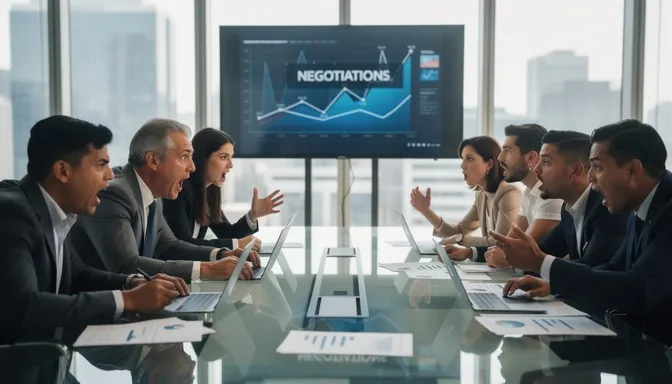
Photo: enterprise contract negotiation business meeting boardroom USA, via images.stockcake.com
There is a particular kind of institutional inertia that takes hold when a vendor relationship matures. What begins as a pragmatic solution — a software platform, a managed service, a third-party integration — gradually becomes load-bearing infrastructure. Contracts auto-renew. Workarounds calcify into standard operating procedure. And somewhere along the way, the enterprise stops asking whether the arrangement still makes sense.
For a growing number of U.S. companies, that question is now overdue. Vendor spending across mid-market and enterprise-tier organizations has climbed steadily over the past decade, and a meaningful portion of that expenditure reflects not genuine value delivery, but accumulated dependency. The distinction matters enormously — both for the balance sheet and for the long-term strategic posture of the business.
The Architecture of Dependency
Vendor lock-in rarely announces itself. It accumulates through a series of individually defensible decisions: a procurement team selects a platform with favorable onboarding terms; a technical team builds workflows around proprietary APIs; a legal team renews a contract without benchmarking the rate against current market alternatives. Each step seems reasonable in isolation. Collectively, they construct a dependency that becomes costly to dismantle.
The most common mechanisms of lock-in include proprietary data formats that complicate migration, deeply embedded integrations that would require substantial re-engineering to replace, and contractual structures that impose steep exit penalties. Some vendors engineer these conditions deliberately. Others benefit from them incidentally. Either way, the enterprise absorbs the cost.
It is also worth distinguishing between two categories of dependency: genuine and phantom. A genuine dependency exists when a vendor provides a capability the organization truly cannot replicate internally — specialized infrastructure, regulatory-grade compliance tooling, or a domain of expertise that would take years to develop. A phantom dependency, by contrast, is one that persists not because internal alternatives are unavailable, but because no one has formally evaluated them. In many enterprises, phantom dependencies account for a substantial share of vendor spend.
Conducting a Vendor Relationship Audit
The starting point for any remediation effort is a structured audit of existing vendor relationships — not merely a review of contracts, but a functional assessment of what each vendor actually delivers relative to what the organization pays.
This process should answer several specific questions. First, what problem does this vendor solve, and does that problem still exist in its original form? Business needs evolve, and solutions procured three or four years ago may address conditions that have since changed. Second, what would it cost to exit this relationship — in direct fees, in transition time, and in operational disruption? Third, has the organization developed internal talent or infrastructure that could absorb this function, partially or entirely?
The audit should also account for the full cost of the relationship, not just the contract line item. Vendor management overhead, internal resources dedicated to integration maintenance, and the opportunity cost of customization limitations all belong in the calculation. When enterprises run this analysis rigorously, they frequently find that the true cost of a vendor relationship is 30 to 60 percent higher than the invoice suggests.
The Build-Versus-Buy Decision, Revisited
The build-versus-buy framework is not new, but it deserves to be applied with greater precision than most organizations currently bring to it. The conventional wisdom — that buying is faster and building is expensive — holds in some contexts and fails in others. The relevant variables are more nuanced than the shorthand implies.
Building internally makes strategic sense when the function in question is core to the enterprise's competitive differentiation, when the vendor's roadmap has diverged from the organization's needs, or when the cumulative cost of external procurement exceeds the amortized cost of internal development over a three-to-five-year horizon. It also becomes more viable as internal engineering and technical operations capacity grows — a trend that has accelerated as U.S. enterprises invest more deliberately in technology talent.
Buying remains appropriate when the capability is genuinely non-core, when the vendor operates at a scale that produces cost efficiencies the enterprise cannot match, or when the speed-to-capability advantage is material to a time-sensitive business objective. The error most organizations make is defaulting to one posture without examining the specifics of the situation.
A third path — one that is underutilized — involves selective internalization. Rather than replacing a vendor wholesale, an enterprise identifies the highest-cost or highest-friction components of the relationship and builds targeted internal alternatives for those elements, while retaining the vendor for functions where the value proposition remains sound. This approach reduces dependency incrementally without requiring a full migration effort.
Reclaiming Leverage in Vendor Negotiations
Even where an enterprise determines that a vendor relationship should continue, the audit process itself creates negotiating leverage. Vendors respond to informed counterparties. When a procurement team can demonstrate that it has evaluated internal alternatives, benchmarked rates against current market conditions, and identified specific contractual terms it wishes to renegotiate, the dynamic of the conversation shifts.
Enterprise clients in the United States have more leverage than they often exercise, particularly with mid-tier vendors whose revenue concentration makes large accounts strategically important. Renewal cycles are the most natural inflection point for renegotiation, but they are not the only one. Material changes in business scope, significant platform updates, or the introduction of competing solutions in the market can all create legitimate grounds for reopening commercial terms.
Organizations that conduct vendor audits on a regular cadence — rather than waiting for a contract crisis — maintain this leverage continuously. They are rarely surprised by renewal terms, and they approach vendor conversations from a position of preparation rather than urgency.
Building Toward Operational Independence
The ultimate objective of this work is not to eliminate vendor relationships — it is to ensure that every vendor relationship the enterprise maintains is a deliberate choice rather than an inherited obligation. That distinction defines the difference between a technology and operations strategy that serves the business and one that merely persists.
For U.S. enterprises navigating an increasingly complex vendor landscape, the path forward requires institutional discipline: regular audits, rigorous build-versus-buy analysis, and a procurement culture that treats external dependency as a cost to be actively managed rather than a condition to be passively accepted.
The organizations that develop this discipline will find that they spend less, adapt more quickly, and retain greater control over the systems and processes that define how they operate. Those that do not will continue to fund vendor growth at the expense of their own.