Frozen in the Middle: How Misaligned Decision Authority Is Silently Stalling American Enterprise Execution
Photo: Rdellbillings, CC BY-SA 4.0, via Wikimedia Commons
There is a particular kind of organizational dysfunction that rarely appears on a balance sheet, yet reliably degrades margins, accelerates talent loss, and blunts competitive agility. It does not announce itself through system failures or visible process breakdowns. Instead, it operates quietly—embedded in the gap between where decisions are made and where the consequences of those decisions are actually felt.
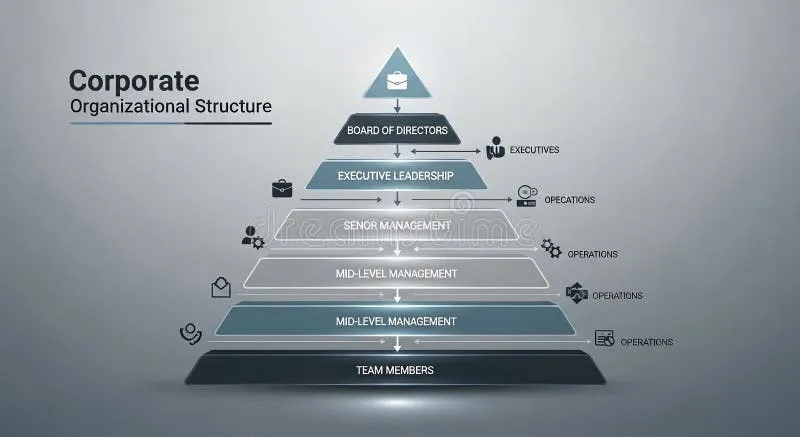
For a significant number of U.S. enterprises operating in the mid-market and above, that gap is widening. Frontline managers and operational teams possess granular, real-time knowledge of the constraints, risks, and opportunities shaping daily execution. But the authority to act on that knowledge sits several layers above them—with executives who are often removed from the operational texture that makes those decisions consequential. The result is a structural bottleneck that no workflow tool, no dashboard refresh, and no all-hands meeting can fully resolve.
Understanding why this misalignment forms—and how to correct it—is one of the more pressing organizational challenges facing American enterprise leadership today.
How Authority Structures Fall Out of Sync with Operations
Most enterprises do not design misaligned authority structures deliberately. They inherit them. A company that grew rapidly through acquisition consolidates decision-making at the top to maintain control over newly integrated units. A regional firm that expanded nationally retains the approval hierarchies it built when it operated out of a single location. A manufacturer that added service lines onto a product-centric organization never restructured its governance model to reflect the different cadence and risk profile of service delivery.
In each of these scenarios, the authority structure reflects the organization as it once was—not as it currently operates. Over time, the divergence between the two creates friction that is difficult to see from the executive level but acutely felt by the people managing day-to-day execution.
Consider a regional logistics company that expanded into six new states over three years. District managers responsible for carrier relationships and route optimization were required to escalate any contract modification above a modest dollar threshold to a central procurement team. The procurement team, operating on a weekly review cycle, was routinely unavailable to respond to time-sensitive carrier negotiations. District managers began losing preferred carriers to competitors who could commit faster. The financial impact was measurable—but because it appeared as margin compression rather than a discrete event, leadership did not initially connect it to the approval bottleneck.
The authority structure had not kept pace with the operational tempo the company's growth demanded.
The Executive Visibility Problem
The counterpart to frontline powerlessness is executive blindness. Senior leaders who hold decision authority often lack the operational context to exercise it effectively. They receive aggregated data—revenue figures, utilization rates, headcount metrics—that compress the operational texture into numbers that obscure as much as they reveal.
This is not a failure of executive capability. It is a structural consequence of how information travels through layered organizations. By the time operational intelligence reaches the C-suite, it has been filtered, summarized, and in many cases softened by managers who are reluctant to surface problems that reflect poorly on their teams. What arrives at the top is often a sanitized version of a more complicated reality.
The practical effect is that executives are making decisions about operational matters using information that is incomplete, delayed, or both. Meanwhile, the frontline employees who possess the most accurate picture of those matters are waiting for approvals that may not reflect the actual constraints they are navigating.
This dynamic is particularly pronounced in industries characterized by high operational variability—construction, healthcare services, field-based professional services, and complex manufacturing among them. In these environments, conditions on the ground can shift faster than approval cycles can accommodate.
Diagnosing the Misalignment in Your Organization
Before restructuring authority frameworks, enterprise leaders need a clear diagnostic picture of where the misalignment is most acute. The following questions offer a useful starting framework:
Where are decisions consistently delayed? Map the approval workflows across your organization and identify where requests routinely stall. Pay particular attention to decisions that are time-sensitive by nature—vendor negotiations, customer escalations, resource reallocation during project execution.
What decisions are being escalated that shouldn't require escalation? Interview frontline managers about the decisions they escalate not because the stakes require it, but because policy mandates it. These are often the most revealing data points, because they expose authority structures that were designed for risk management but are functioning as operational friction.
Where is institutional knowledge concentrated? In many enterprises, the employees with the deepest operational knowledge are not the ones with decision authority. Identifying that concentration helps surface where authority reallocation would have the highest operational impact.
How long does it take for operational intelligence to reach executive leadership? Trace a specific operational problem—a supply constraint, a client escalation, a staffing gap—from the moment it emerges to the moment it reaches a leader with authority to address it. The elapsed time is a proxy for structural misalignment.
Restructuring for Execution: What the Evidence Suggests
Organizations that have successfully realigned their authority structures share several common approaches. None of them involve wholesale decentralization—an overcorrection that introduces its own risks. Instead, they reflect deliberate, bounded expansions of frontline authority paired with improved executive access to unfiltered operational data.
A regional healthcare services company operating across multiple states restructured its operational approval framework after identifying that site-level managers were escalating staffing and scheduling decisions that required same-day resolution. The company established tiered decision authority—granting site managers autonomous approval within defined parameters and reserving escalation for decisions that crossed financial or compliance thresholds. Response times on operational decisions dropped significantly, and the company reported a measurable reduction in the overtime costs that had accumulated when staffing decisions were delayed.
A mid-market technology services firm took a different approach, investing in structured operational intelligence channels that gave senior leadership direct, unfiltered access to field-level reporting. Rather than redistributing formal authority, they compressed the information lag that had been distorting executive decision-making. The result was faster, more contextually accurate decisions from leadership—without the governance risks associated with decentralized authority.
Both approaches reflect the same underlying principle: authority structures must be calibrated to the operational tempo and information environment of the organization as it actually functions, not as it was originally designed.
The Talent Dimension
There is a workforce retention dimension to this problem that American enterprises cannot afford to overlook. Capable operational managers who are consistently denied the authority to act on their own expertise do not simply become frustrated—they leave. The professionals most likely to seek authority commensurate with their competence are precisely the ones most likely to find it elsewhere.
In a labor market where experienced operational talent remains difficult to retain, organizations that structurally disempower their best frontline leaders are compounding a recruitment and retention challenge with an organizational design failure. The cost is not only operational—it is cumulative, and it compounds over time.
Aligning Authority with Reality
The enterprises that will sustain competitive advantage in the years ahead are those that treat organizational design as a dynamic discipline rather than a fixed inheritance. Authority structures that made sense at a prior stage of growth or operational complexity may be actively working against the organization today.
The diagnostic work is not glamorous, and the restructuring conversations it necessitates are rarely comfortable. But the alternative—an organization where the people who know the most are consistently waiting for permission from the people who know the least about what is happening on the ground—is a structural liability that no amount of strategic investment can fully offset.
For U.S. enterprise leaders committed to execution excellence, closing the gap between decision authority and operational reality is not an organizational development initiative. It is a core competitive imperative.